
2-minute check
Brakes, tire damage, folding latch, lights, throttle and obvious frame damage.
A simple inspection routine that protects your ride: tires, brakes, battery, cleaning, storage and the warning signs you should never ignore.
Think of this as a helpful starting rhythm—not a substitute for your owner's manual. A high-mileage commuter in wet conditions may need more frequent attention than an occasional fair-weather rider. Apollo's own model-specific schedules demonstrate how service intervals differ by scooter. See Apollo's official Go schedule.
Brakes, tire damage, folding latch, lights, throttle and obvious frame damage.
Pressure gauge for air-filled tires, tread, cable condition, light cleaning and wheel stability.
Brake wear, charging port, new noises, firmware notices and service mileage.
Model-specific brake work, bearings, replacement tires, fastener torque and post-impact checks.
Tick the items you have inspected. Use the filters to focus on today's ride or your regular upkeep. The boxes save in this browser where supported; the printed version shows all tasks.
All maintenance tasks · check only what you have actually inspected
The U.S. Consumer Product Safety Commission recommends checking scooter components before riding and following manufacturer charging instructions. If a component is safety-critical and the cause isn't obvious, a qualified repair shop is the safer next step. Find electric scooter repair specialists.
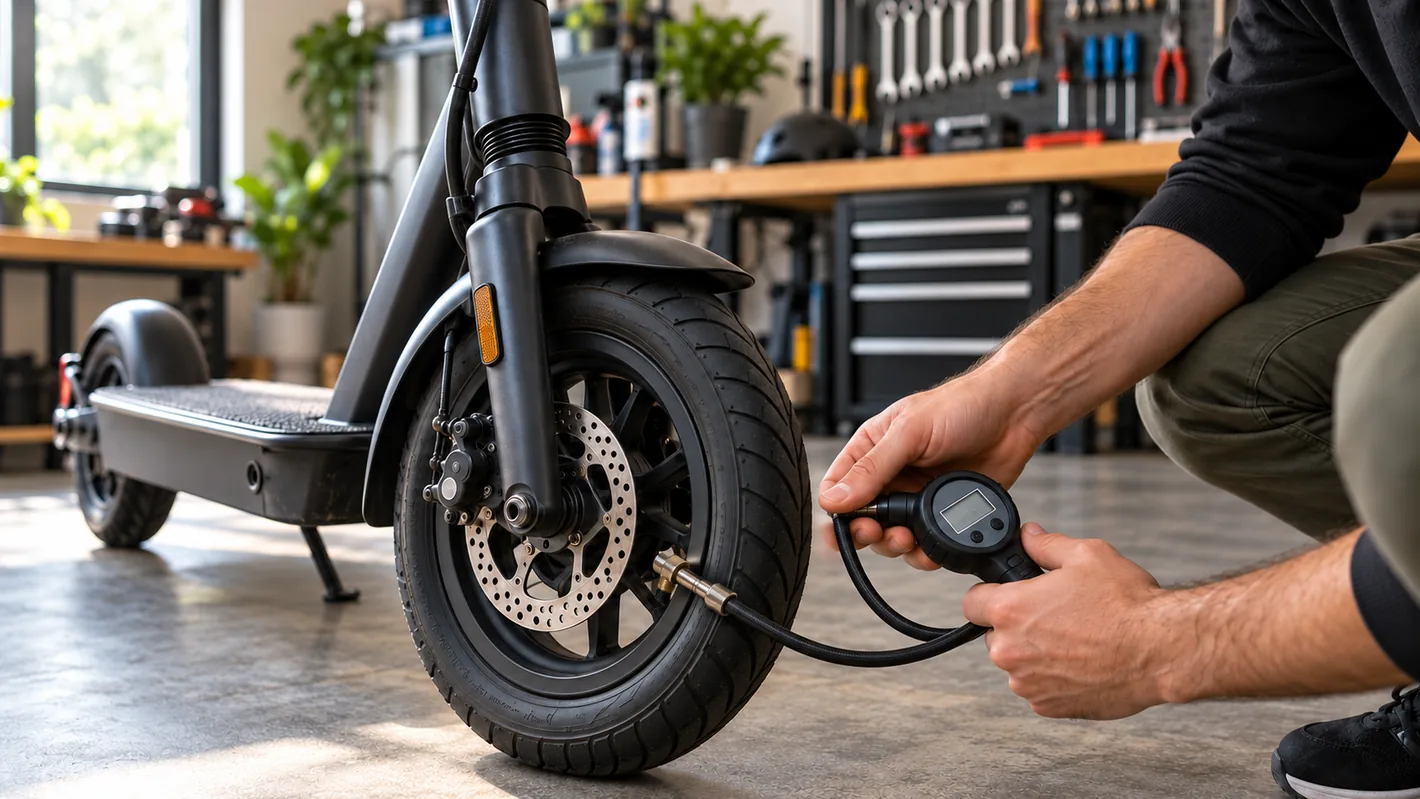
On a scooter with pneumatic (air-filled) tires, locate the valve stem coming through the wheel rim. With the scooter parked and the tire cool, remove the valve cap, attach an appropriate pressure gauge to the valve, and compare the reading with the recommended PSI for your exact scooter and tire. Refit the cap when finished.
Underinflated tires can affect steering, range and puncture risk. Overinflation is not a shortcut to better performance; it can reduce grip and ride comfort. Look for the manufacturer's recommended operating pressure rather than relying on the tire's printed maximum alone.
Solid tires cannot be inflated. Instead, look for cracking, chunking or damaged rims and inspect wheel hardware. After rough riding, revisit our off-road surface guide to understand why uneven terrain adds stress.
Check whether the levers feel normal and the scooter stops predictably. A new scraping sound, weak bite or visible damage deserves service. Never put lubricant on rotors or pads.
Look for stem play, a folding latch that won't stay locked, and new vibrations. Don't simply overtighten fasteners without a model-specific torque instruction.
Verify the brake light, front light, horn or bell, throttle return and warning indicators. A stuck throttle or unreliable brake cutoff is a reason to stop riding.
Use only the charger supplied or specifically recommended by the scooter manufacturer. A plug that physically fits may have different electrical characteristics. If you notice damage, stop using the charger. Read our charging guide.
The CPSC advises against charging while asleep or away and recommends being present during charging. Keep the scooter away from exits and flammable objects, and do not charge a damaged or wet battery.
Avoid extreme temperatures, damp storage and leaving a depleted pack unused for long periods. Manufacturers vary on exact storage state of charge; Apollo's general guidance discusses approximately 60–70%, but follow your own model's instructions.
If range suddenly drops, consider weather, hills and tire pressure before assuming the battery has failed. A persistent decline or unexpected cutoff needs evaluation. Read our battery range guide.
Power off the scooter and unplug the charger. Use a soft, slightly damp cloth to wipe the frame, stem and deck; use a soft brush to clear grit from tire grooves and accessible surfaces. Keep water away from charging connectors, displays and openings. Avoid high-pressure cleaners, steam, immersion and blasting spray into bearings. Follow the manufacturer's guidance for whether any hinge or cable needs lubrication, and never lubricate braking friction surfaces.
Allow the scooter to dry thoroughly before riding or charging if its instructions require it. Do not interpret an IP rating as a promise of waterproofing; our rain and IP-rating guide explains the limitations.
For extended storage, choose a dry environment within the maker's temperature limits, protect the charger and connectors, and follow the model's state-of-charge and recharge schedule. Segway's E2 Plus II manual provides a concrete example of a model-specific care schedule—not a universal interval for every scooter.
| What you notice | What you can check safely | When to get help |
|---|---|---|
| Range falls sooner than expected | Tire pressure, load, hills, temperature, riding speed. | Sudden cutoffs, unexpected heat or severe decline. Battery troubleshooting. |
| Won't charge | Approved charger, outlet, exterior port damage, allowable charging temperature. | Heat, swelling, burned connectors or persistent failure. Charging diagnosis. |
| Brakes scrape or feel weak | Inspect visible dirt, obvious wear and the lever response without dismantling parts. | Don't ride until brake function is restored by a qualified technician. |
| Wheel wobbles or clicks | Look for visible wheel/rim damage with the scooter powered off. | Unusual play, tire bulges or steering vibration require inspection. |
| Motor stops responding | Confirm normal lock/park settings and read manufacturer-specific error codes. | Repeated cutoffs or jerking: motor symptom checker. |
Still uncertain? Start at our interactive troubleshooting hub. For inspections involving brakes, bearings, folding hinges, electrical components or damaged batteries, use the electric scooter repair directory.
For pneumatic tires, check before longer rides or at the manufacturer’s interval. Some models call for a check before every ride. A tire can lose air without looking flat, so use a gauge rather than squeezing it. Solid tires have no air pressure to measure.
There is no universal electric scooter PSI. Find the pressure for your exact tire and model in the manual, manufacturer support, or approved tire specifications. The number used for one scooter can be wrong for another.
Avoid soaking, high-pressure spray, steam cleaning and flooding ports or bearings. Use a lightly damp cloth and the method specified for your exact scooter. Its water-resistance rating is not permission to wash it aggressively.
Do not apply oil or general-purpose lubricant to brake discs, pads, drums, or tire surfaces. Certain hinges or cables may require a specific lubricant and procedure according to the manufacturer; if in doubt, ask a technician.
The U.S. CPSC advises staying present when charging and not charging while asleep or away. Use only the charger supplied or recommended by the scooter manufacturer, follow the manual and unplug when charging is complete.
You do not need to inflate solid tires. Still inspect for cracks, chunking, uneven wear, loose wheels, brake problems and rim damage. Tire type does not change folding-latch or battery safety checks.
There is no safe one-size-fits-all mileage. For example, Apollo publishes a model-specific maintenance chart for the Apollo Go that includes checks at defined distances. Follow your exact model’s service schedule, and arrange a check sooner if you notice a safety issue.
Underinflated tires, heavy loads, hills, cold temperatures and riding style can reduce range. A sudden drop, unusual heat or intermittent power can also signal a fault. Use our battery guide and a qualified technician rather than opening the battery pack.
Schedules and safety recommendations above are grounded in published guidance. Each manufacturer's instructions apply to its specified models; your own manual takes precedence.
This information is not a substitute for a model-specific manual or professional inspection.