Are Radio Flyer Scooters Good for Kids? 4 Models Compared
They can be excellent first rides—but the right one depends on whether your child is learning to stand, already kicking confidently, or ready for a bigger glider. Here's how to choose without buying a scooter they'll outgrow immediately.
By TheScooterist Editorial Team · Originally published March 24, 2023 · Updated October 26, 2026
Affiliate disclosure: If you buy through an Amazon link on this page, TheScooterist may earn a commission at no extra cost to you.
Model-informed illustration. See each scooter's current listing photos on Amazon.
The short answer
Yes—for the right age and riding stage.
Radio Flyer's beginner scooters emphasize low decks and extra wheels. Those features can make early practice less intimidating. The My 1st Scooter is a straightforward first standing scooter; the Scoot 2 Scooter starts as a seated ride-on. The Flyer Glider models suit children ready to learn lean-to-steer handling.
Radio Flyer scooter comparison: age, wheels, and fit
Start here before choosing by color. A scooter's wheel layout, steering method, and weight limit tell you much more about whether it will work for your child. Ages are the manufacturer's guidance, not a guarantee of individual readiness.
Check the model number, age/weight label, and current product listing before ordering; similarly named generations and color variants can differ.
A quicker way to choose
Find the right starting point for your child
Pick an age range and how comfortable your child is on a scooter. This gives you a starting model to inspect—not a substitute for checking physical fit.
For a child aged 2–4 learning a first standing scooter, compare My 1st Scooter with Flyer Glider Jr.. The steering styles are different.
Four Radio Flyer scooters worth comparing
The differences below matter more than a long list of nearly identical colors. We've kept the recommendations focused on distinct designs, so each one earns its place.
01 / Best first standing scooter
Radio Flyer My 1st Scooter
Ages 2–5
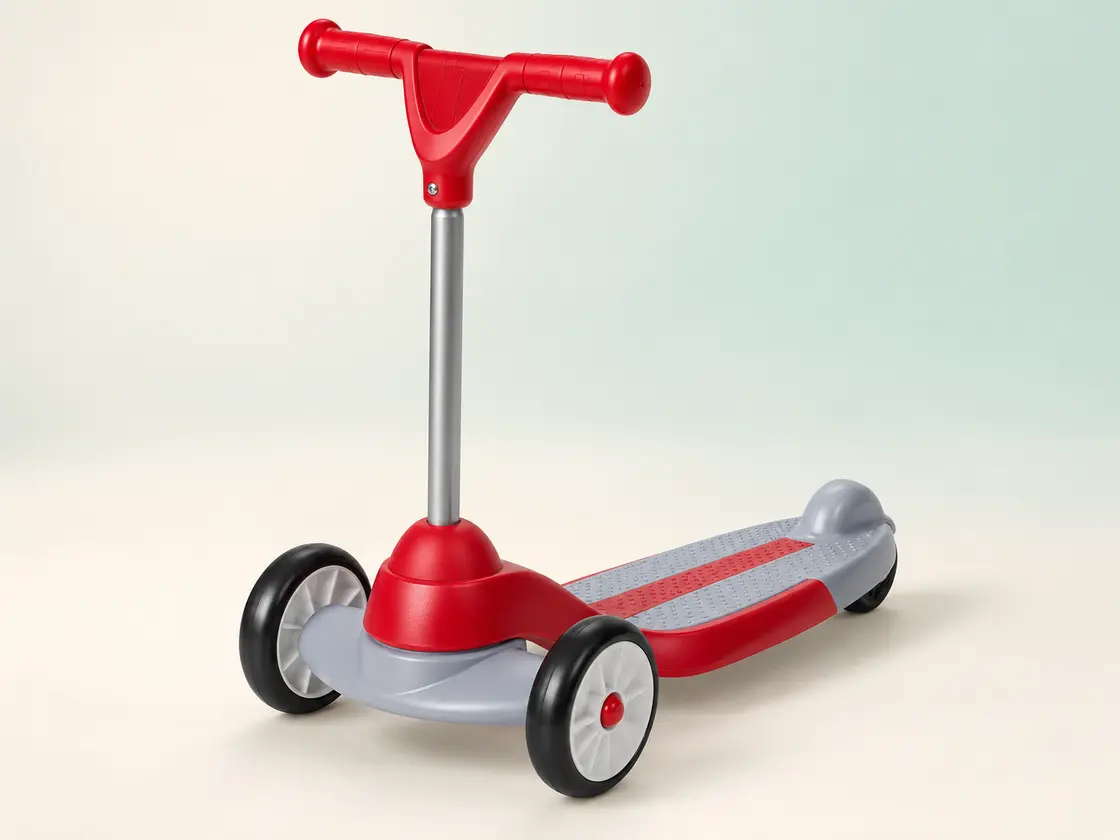
Illustration based on the model's design—not a retailer photograph.
Choose this if your child can stand and push but is still figuring out balance. The low, broad textured deck gives a small rider an obvious place to plant a foot. Two widely spaced front wheels help the scooter feel more planted at low speed, while the single back wheel keeps it a true kick scooter rather than a ride-on toy.
The handlebar turns rather than relying on the gliders' body-lean technique. Radio Flyer also designed a limited turning radius and a rear foot brake. That combination may help make a first lesson predictable, though a young rider still needs to practice stopping with an adult close by.
3 wheelsWide, low deckRear foot brake
Watch out for: This is a short-lived fit if your child is already tall, near the weight limit, or eager to carve fast turns. Don't assume the handlebar adjusts like the Glider line.
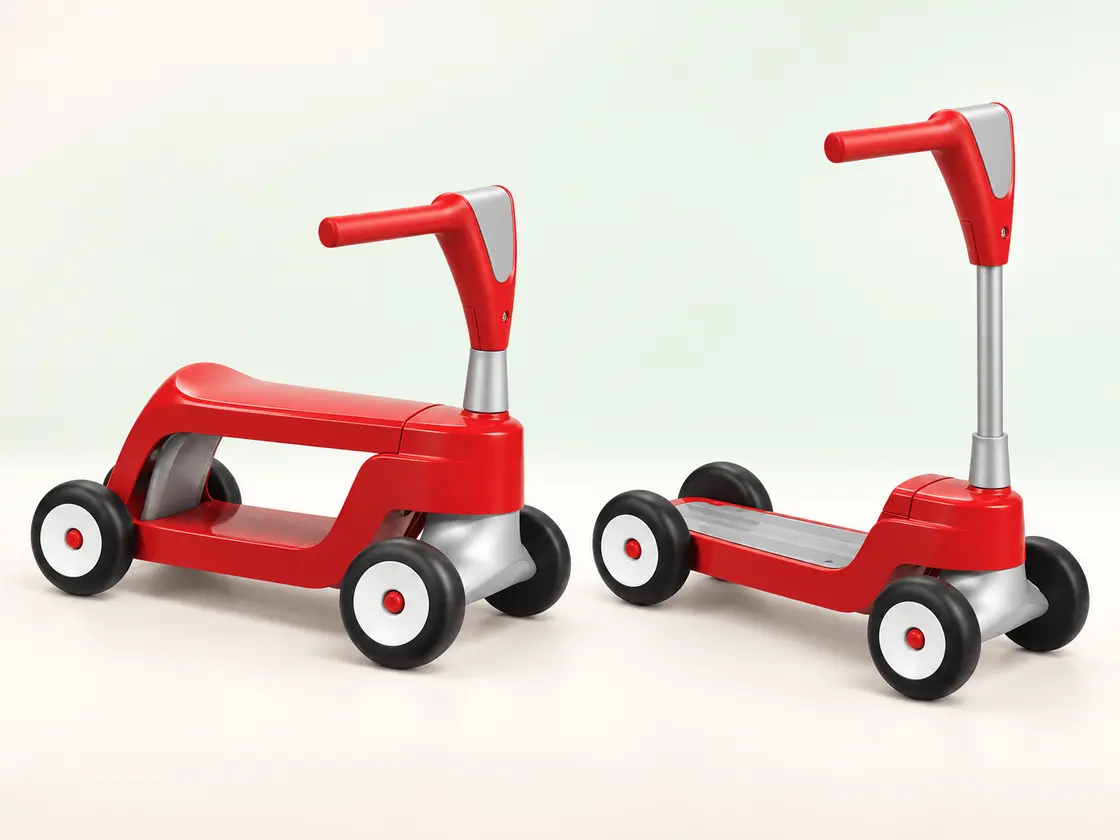
Both modes illustrated; inspect the exact color and version on Amazon.
Choose this for a younger toddler who may enjoy seated scooting before trying a standing deck. The clever part is the flip-over base: with no tools, the seat becomes a foot platform when your child is ready for the next stage. There is storage space beneath the seat in ride-on mode.
Four small wheels and a low frame suit gentle, flat-ground play. It is a different kind of scooter from the faster, lean-to-steer Flyer Gliders. If your child already kicks confidently on a standing scooter, the convertible feature may not justify the extra bulk.
4 wheelsSeated + standingTool-free conversion
Watch out for: The four solid wheels and low ride-on construction favor beginner play over longer sidewalk glides. Keep within the indicated capacity in both modes.
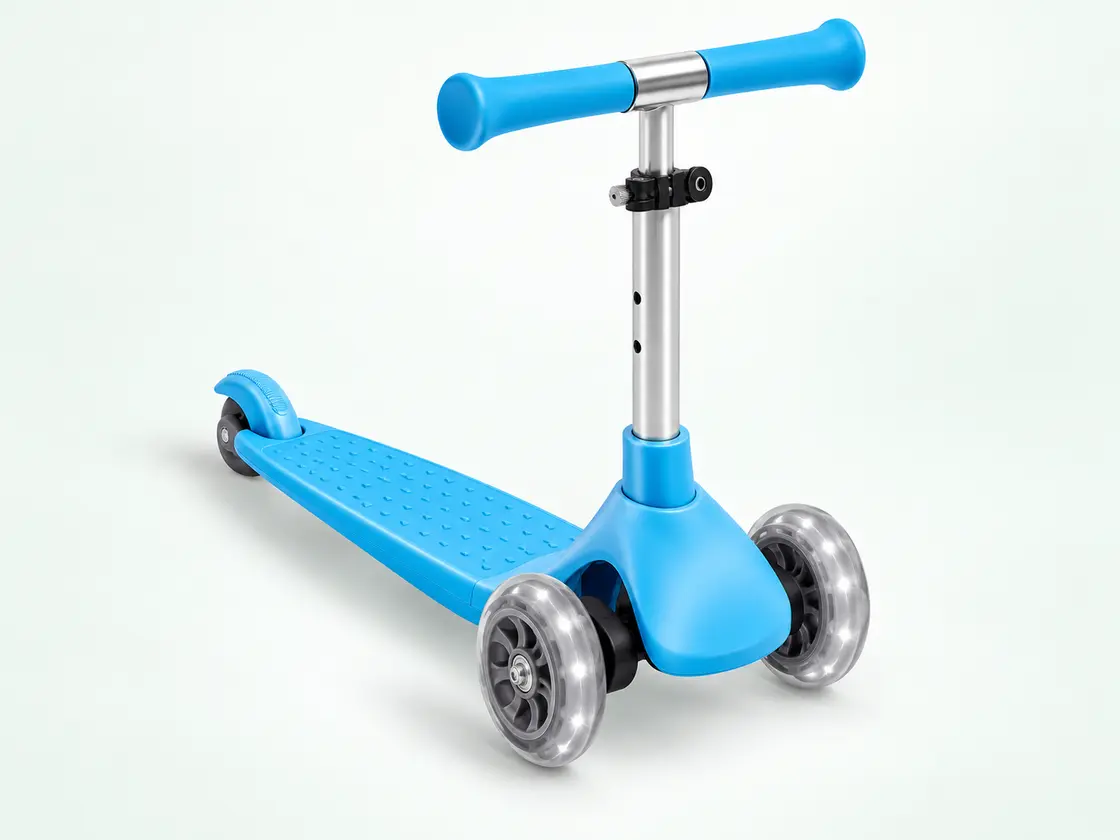
Original model-informed rendering. Amazon shows the current product images.
Choose this for a child ready to learn steering by gently leaning rather than twisting the handlebar. Two front wheels, a single rear brake wheel, and a narrower flexible deck make it feel different from My 1st Scooter. The polyurethane front wheels have motion-powered lights and smoother-rolling bearings.
Its adjustable handlebar is useful as a child grows, but the manufacturer's 44-pound capacity matters more than the marketing phrase “grows with your child.” More effortless rolling can also mean more speed, so a clear, level practice area is important.
Watch out for: A child accustomed to rotating a T-bar may need patient practice to understand weight-shift turning. Check the color/variant: we're discussing the light-up-wheel version.
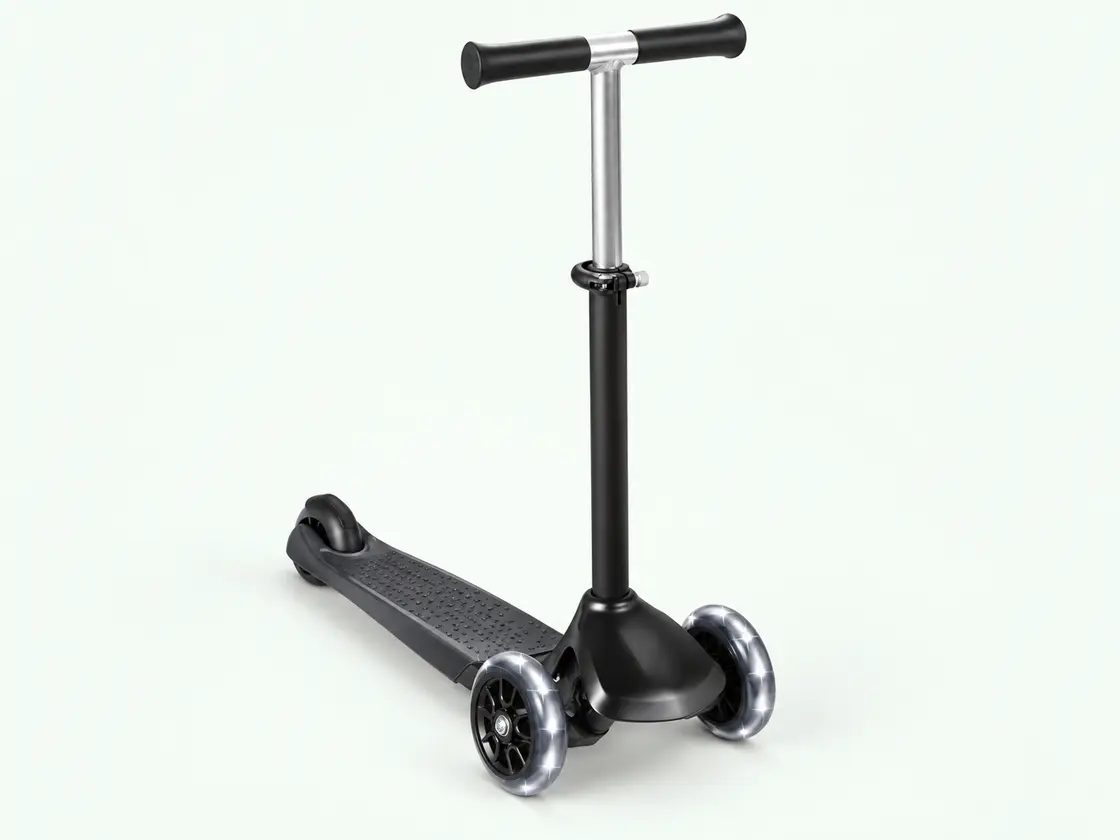
Model-informed illustration. Refer to the Amazon listing for exact photos.
Choose this when a smaller toddler scooter is no longer the right fit, but your child still prefers the stability of a three-wheel glider. The larger deck and taller adjustable handlebar are designed for children ages 5–12, with a notably higher 110-pound capacity.
Like the junior, it uses lean-to-steer handling, polyurethane light-up wheels, and a rear fender brake. It can suit school-age riders who enjoy carving gentle turns on clean pavement. It is not a stunt scooter for jumps or skatepark tricks, and a confident older child who wants a traditional two-wheel kick scooter may prefer a different category.
3 wheels110 lb capacityLean-to-steerMotion lights
Watch out for: Check standing height and steering preference, not just the age label. The larger frame may overwhelm a small five-year-old.
What Radio Flyer gets right—and where it falls short
What works well
First-rider models keep feet close to the ground and provide more than two contact wheels.
The lineup spans seated toddler play, first standing rides, and a larger school-age glider.
The Glider line offers adjustable bars, rear brakes, and motion-powered wheel lights.
Official product manuals and replacement-part support make assembly and upkeep easier.
What to consider
A toddler can outgrow a model by weight or handlebar fit long before its upper age label.
Lean-to-steer feels unfamiliar if a child expects the handlebar to turn the front wheel.
Compact solid wheels and premium rolling wheels behave differently on rough pavement.
None of these four is intended as an electric scooter or a freestyle stunt scooter.
How to tell whether the scooter actually fits your child
1
Check readiness, not just age
A one-year-old may be ready for supervised seated scooting but not a standing kick scooter. Older toddlers vary widely in balance and coordination. Let your child practice with support before expecting independent riding.
2
Check standing position
The child should stand comfortably on the deck and hold the bar without stretching, hunching, or lifting shoulders. On adjustable models, set the handlebar at a natural, relaxed height and tighten the clamp exactly as instructed.
3
Check turning style
My 1st Scooter uses conventional handlebar turning, while the Flyer Gliders require a gentle shift of body weight. Try steering slowly on level ground. Neither style is universally better; it depends on the rider.
4
Check the ground and stopping room
Pick a flat, dry, open space away from roads, driveways with moving cars, steps, and steep slopes. Let your child practice the foot brake at walking speed before going farther.
A practical safety checklist before the first ride
Use a properly fitted, age-appropriate helmet and consider knee, elbow, and wrist protection.
Assemble the correct model using the manufacturer's instructions; recheck the stem clamp, fasteners, wheels and rear brake.
Stay within the model's rider-weight limit and supervise young children closely.
Begin on clean, level pavement in daylight—not wet surfaces, roads, ramps or crowded walkways.
Teach controlled starts, gentle turns and stopping before encouraging faster riding.
Replace worn or damaged parts and stop riding if a wheel, deck or steering assembly feels loose.
They can be, if the child can stand, balance with support and follow simple instructions. My 1st Scooter is designed for beginner standing riders ages 2–5; Flyer Glider Jr. is an option once the child is comfortable learning lean-to-steer. Stay nearby and check actual handlebar and deck fit.
Can a one-year-old ride a Radio Flyer scooter?
Scoot 2 Scooter is labeled for ages 1–4 and starts as a seated ride-on. That does not mean every one-year-old is ready: follow the product's age, weight and assembly guidance, and use close adult supervision. Do not put a one-year-old on a standing scooter just because the brand sells toddler products.
What is the difference between My 1st Scooter and Flyer Glider Jr.?
My 1st Scooter has an extra-wide platform and conventional steering for first steps. Flyer Glider Jr. uses a slimmer deck, adjustable handlebar and lean-to-steer, plus light-up polyurethane wheels. Both have two wheels in front and one in back, but they handle differently.
Does a Flyer Glider scooter turn when you twist the handlebar?
These gliders are designed primarily for lean-to-steer riding. Children shift their weight gently to turn. That takes a different skill than rotating a conventional T-bar.
Are Radio Flyer scooters electric?
The four models in this guide are non-motorized. They move when a child pushes with a foot or, for the convertible Scoot 2 Scooter, scoots while seated.
How long will a Radio Flyer scooter last?
There is no useful universal number of years. Lifespan depends on fit, how often it is used, surfaces, storage and part condition. Check the model-specific weight limit and adjustable-bar range, and inspect the wheels and brake periodically.
Our recommendation
Buy the scooter that fits the next skill—not the biggest age range.
For a child beginning to stand and kick, start with My 1st Scooter. For a younger child still enjoying seated motion, choose Scoot 2 Scooter. When your child is ready to learn lean-to-steer, consider the Glider Jr.; for a taller, more experienced school-age rider, consider the Glider Pro.