Which ramp actually suits your rider, available space and storage—not just the most dramatic trick video?
TheScooterist Editorial Team · Updated October 26, 2026
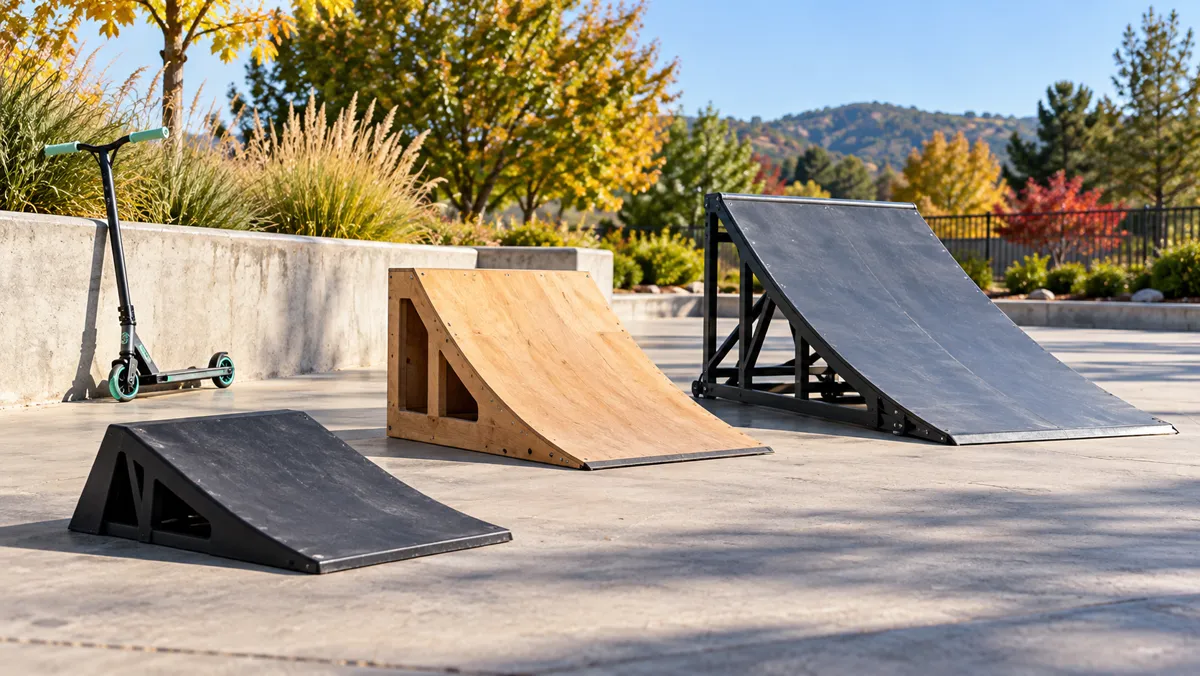
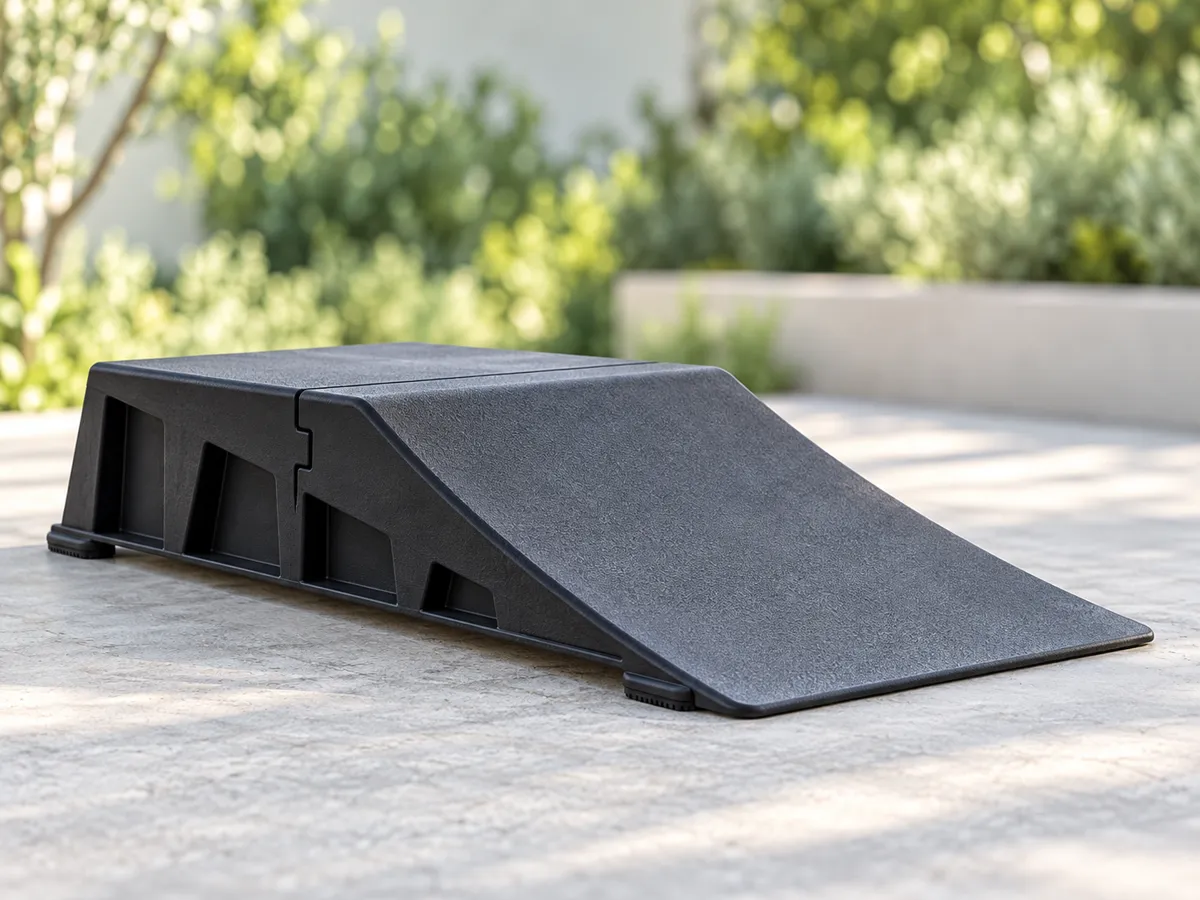
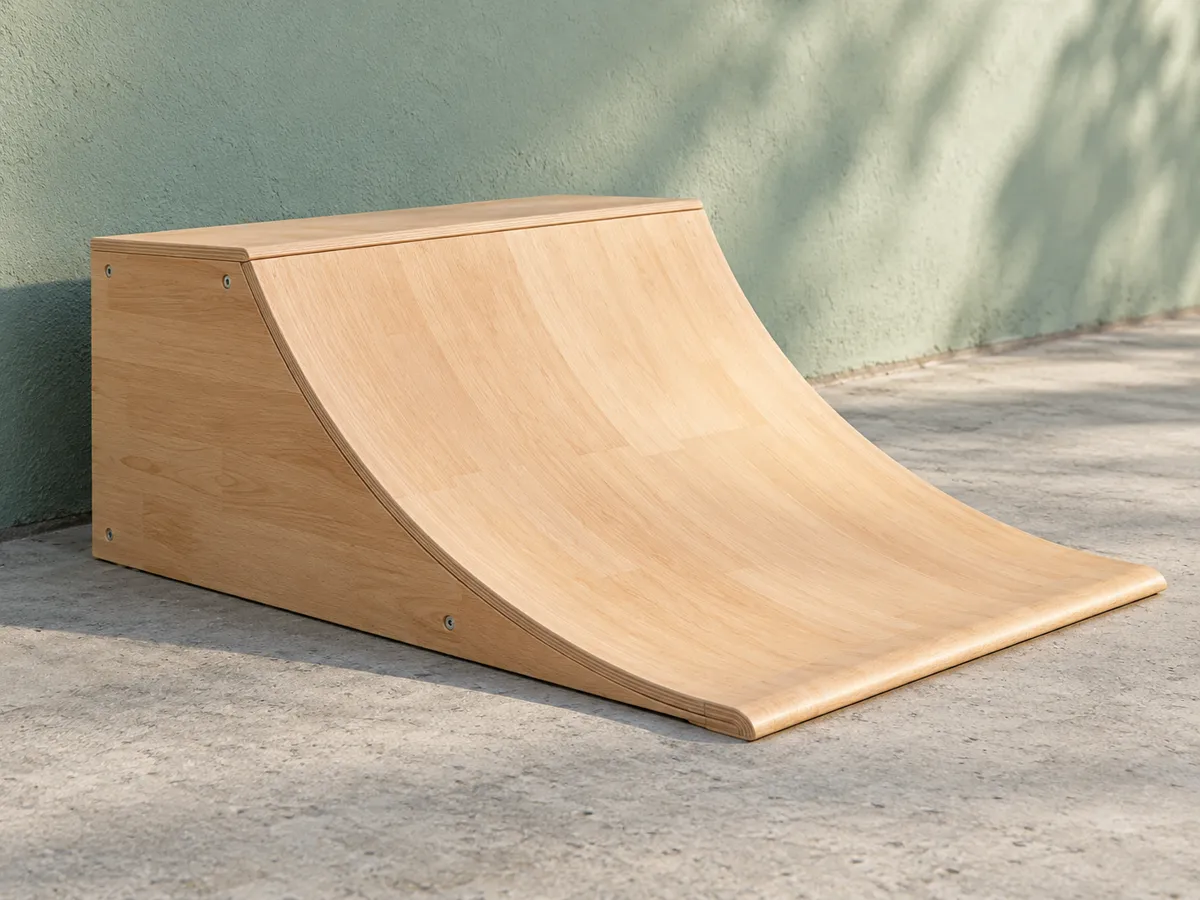
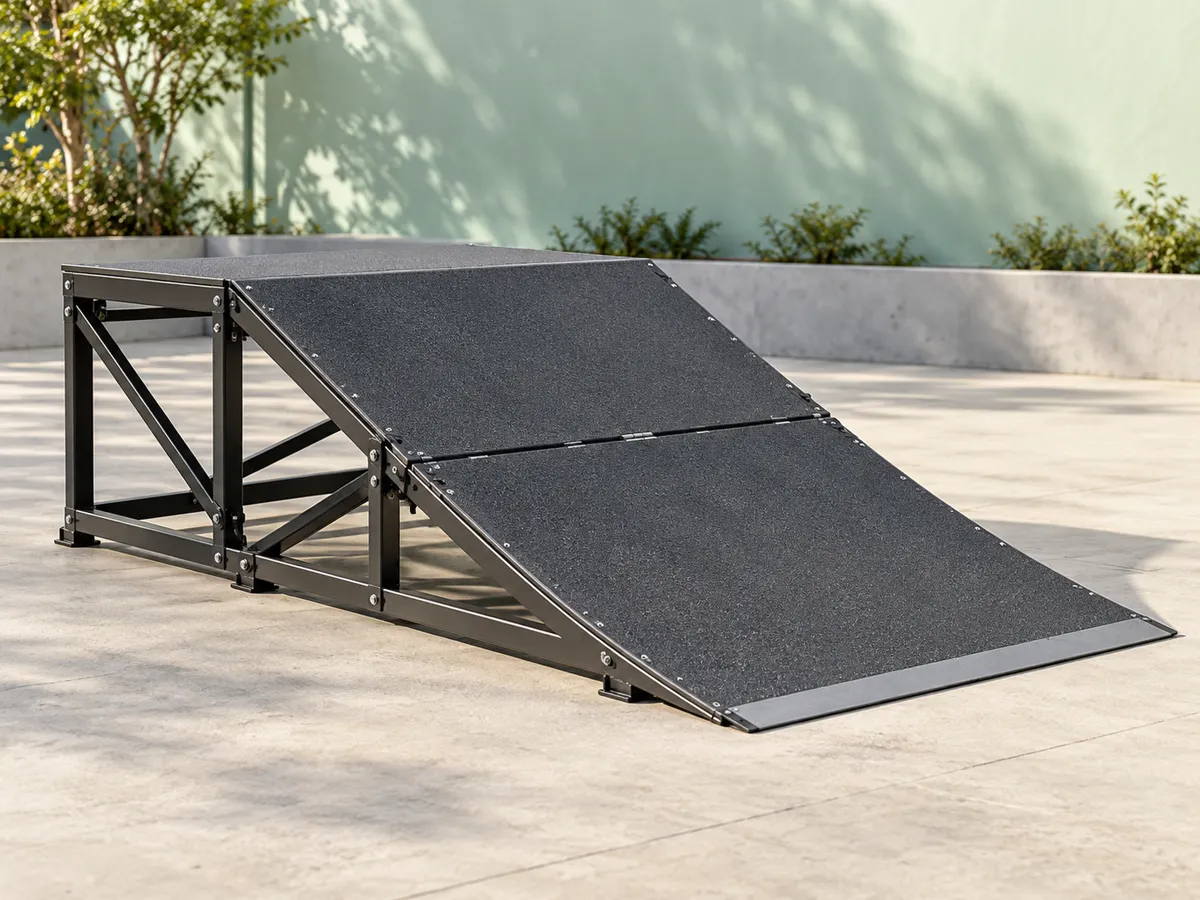
Editorial illustration showing common ramp shapes, not specific products.
The best scooter ramp is the one a rider can approach, launch from and land beyond with control. For a young beginner that might be a low molded-plastic wedge. Someone learning air tricks may prefer a smooth wooden kicker. A large metal launch ramp only makes sense once there is plenty of safe, level runout—and enough skill to use it.
These diagrams illustrate three general styles. They are not product images; the exact model photos are linked in each listing below.
Low wedgeShort, approachable incline for controlled beginningsCurved kickerSmooth upward takeoff for deliberate jump practiceLarge metal launchMore commitment, weight, clearance and runout
Scooter ramp comparison at a glance
A ramp’s height alone doesn't tell the story. Width, the shape of its transition, ground grip and the room after takeoff can matter more than one extra inch.
Tell us a little about the rider and the place you'll practice. This narrows the list to realistic starting points.
8 scooter ramps worth comparing
Each of these models has an identifiable U.S. Amazon catalog listing. Confirm the exact model, dimensions, offer and current availability on the linked page before ordering.
Approx. 12 in when pairedMedium drivewayStackable modules
For a family that wants two pieces to rearrange rather than one fixed obstacle, Landwave is the flexible starting point.
The textured molded-plastic sections can be repositioned as riders learn straight approaches, basic roll-ups and small hops. Placing two ramps together broadens a riding line; it does not automatically create a safe gap jump. Check connection hardware and the exact configuration in the current listing before ordering.
Why choose it: Expandable, weather-tolerant molded modules that can be reconfigured as skills improve.
What to check: More seams and setup decisions than a one-piece kicker; verify joining clips, grip and weight limits for your chosen arrangement.
The J20 is the one to consider when a small, smooth curved takeoff is more useful than a large plastic box.
Graw uses a 15 mm beech-wood J-Series construction and a roughly 20 cm takeoff height. This is a compact progression tool for riders who already roll comfortably and want to practice small controlled launches. The curved face gives a different feel from a straight wedge; the rider still needs a clear landing zone and adult supervision where appropriate.
Why choose it: Purposeful curved takeoff, no big assembly job, easy to carry and store.
What to check: The narrower wooden surface needs care around moisture; it is not a wide beginner training platform.
A relatively wide, low wooden launch face makes this easier to approach straight than a narrow, tall kicker.
The Amazon-listed variant is approximately 26 inches long, 24 inches wide and 8 inches high. Those dimensions are useful when practicing balance and front-wheel alignment at modest speed. It is still a launch ramp, not a toy or a substitute for an adult watching the landing area; measure the actual footprint and inspect the entry lip before use.
Why choose it: Generous approach width relative to its height; a sensible scale for supervised early practice.
What to check: Wood and grip covering need inspection for splinters, loose fasteners and wear; confirm the exact color and ramp variant.
15.5 cm / 6.1 inCompact practice areaFolds; modular options
If the obstacle has to live in a garage corner or the trunk after every session, this compact folding design is attractive.
CORE lists dimensions of 54 × 38.5 × 15.5 cm, with a lift-and-lock system, molded plastic and rubber feet. The low height suits controlled rolling practice and small launches; its narrow width rewards precise approaches but leaves less room for an off-center wheel line. Confirm that the current U.S. Amazon selection is the same folding model.
Why choose it: Small footprint, quick setup and expandable modular design.
What to check: The narrow usable width and low size make it less useful for bigger tricks or broad shared sessions.
The Freshpark moves into an entirely different size and commitment level: this is for a rider who has the space to use a proper launch line.
Freshpark specifies a 37-inch length, 47-inch width, 16-inch height and an 86-pound unit weight, with a stated maximum loading of 500 pounds. It folds for storage, but the weight means it is not something most people carry casually between spots. The broad takeoff needs a correspondingly safe, uncluttered landing and runout.
Why choose it: Wide, durable setup and an established metal-frame design for more serious riding.
What to check: Heavy, expensive and inappropriate for tight spaces or unsupervised first-timers. Check the surface condition and frame locking each session.
The G35 gives a progressing rider noticeably more takeoff than the J20 without moving to an extra-wide steel installation.
The G-series model is listed by the maker at approximately 35 cm high, 50 cm wide and 112 cm long, weighing around 10 kg. Its curved plywood profile is suitable for riders deliberately working on airtime with a proper landing plan. More height is not automatically better: starting too tall usually makes timing and landings harder to learn.
Why choose it: Larger curved takeoff while remaining far more movable than the Freshpark.
What to check: Higher entry stakes and more landing distance; wood still needs dry storage and routine fastener checks.
14 in (model name)Medium to largeRigid wood construction
This wooden launch option is worth comparing if you want a scooter-oriented takeoff shape without buying a very heavy metal ramp.
The Amazon-listed model is sold as a 14-inch-high kicker for pro scooters, skateboards and BMX. Before selecting it, compare the current listing’s usable width, transition curve, load rating and assembly requirements with the alternatives here. A similarly named ramp from another seller may have a different footprint or materials.
Why choose it: Distinct middle-ground height for riders progressing past tiny practice wedges.
What to check: Manufacturer details are less easy to corroborate than those of Freshpark, Graw or CORE; verify every critical measurement before buying.
Modular arrangementMedium to largeMultiple separate sections
Choose this only when the goal is a reusable setup with more than a single approach and takeoff—not just the cheapest way to get airborne.
The starter pack combines two ramps and a matching landing deck. That extra flat section makes it possible to build an obstacle sequence once each module is correctly connected and stabilized. Check package contents, connector instructions, and the clear space needed for every approach and exit. Start with the simplest configuration first.
Why choose it: A modular platform for more varied practice patterns as experience grows.
What to check: Costs more space and assembly time than a single kicker; compatibility between separate Landwave kits should be checked.
A straight wedge is approachable and predictable. A curved kicker can generate a more upward takeoff. Neither shape is inherently safer: use the one that matches the rider's existing control and available landing area.
2. Work backward from the landing
Plan the clear landing and runout before placing the ramp. Avoid roads, parked cars, pedestrian paths, fences, stairs and uneven ground. If the landing is tight, the ramp is too large for that location.
3. Look below the riding surface
Check the stability of the base, the entry lip, seams, anti-slip feet, fasteners and any joiners. Test whether a ramp shifts on that exact surface before anyone rolls onto it.
4. Match material to your routine
Plastic modules are practical outdoors and easy to rearrange. Wood can provide a pleasant smooth transition but needs dry care. Steel often suits heavy-duty setups, with more weight and storage demands.
Set up a safer first session
Use an actual nonfolding stunt scooter in good mechanical condition; check bars, clamp, wheel bearings and brake first.
Choose dry, level pavement, check anti-slip feet and inspect every connection. Follow the ramp maker's assembly and weight instructions.
Wear a properly fitted helmet and appropriate wrist, knee and elbow protection. Children need close adult supervision.
Begin with straight, slow approaches and rolling practice before any air or trick attempts. Progress one difficulty at a time.
Check the whole approach, takeoff, landing and stopping path for pedestrians, traffic and obstacles; never put a portable ramp in a public roadway.
What type of ramp is best for a beginner stunt scooter rider?
Usually a low, stable wedge or small kicker in a place with plenty of clear ground. The rider should already steer and stop reliably without a ramp. Start with rolling exercises and make the step up gradually.
Can an electric scooter use a stunt ramp?
Most everyday electric commuter scooters are not designed for jumping or skatepark impacts. Their weight, folding joints, batteries and suspension have different limits. Use only equipment explicitly rated by its manufacturer for that kind of riding.
Is a wooden scooter ramp better than a plastic one?
Not universally. Wood often gives a smoothly shaped transition and can be sturdy, while modular plastic may be easier to move and arrange. The real comparison is the precise model's shape, grip, support, construction and storage needs.
Do I need a quarter pipe or just a launch ramp?
A launch ramp is easier to fit into a simple straight practice line. Quarter pipes involve riding a more vertical curved wall and often require more space, installation and technique. Most new ramp users should start smaller.
Can I leave a portable ramp outside?
Only if the manufacturer permits it. Even weather-resistant materials can deteriorate or collect grit. Check fasteners and surface traction regularly; store plywood equipment dry when it's not being used.
Bottom line: For most home setups, start with the smallest ramp that still makes practice engaging. A bigger launch is only an upgrade when the rider, landing space and supervision are ready for it.
For more riding help, explore our scooter guides and articles. If a rider is still learning to brake and steer, practice those fundamentals before adding a ramp.