Important safety recall: G30P and G30LP
In March 2025, the U.S. Consumer Product Safety Commission announced a recall of all Segway Ninebot MAX G30P and G30LP KickScooters covered by the U.S. notice because the folding mechanism can fail. The CPSC tells owners to stop using the recalled scooter and contact Segway for inspection and a free maintenance kit. If you're buying used, require proof that the recall remedy and necessary checks have been completed before riding.
Read the official CPSC notice · Segway recall instructions
Quick verdict: For paved commutes, the original G30P still offers a useful 551Wh battery, self-sealing 10-inch pneumatic tires and straightforward charging. But it weighs roughly 42 pounds, has no suspension and isn't especially lively uphill. At a steep discount, a properly remedied, well-maintained example may make sense. At a price close to a newer MAX G2, the G30P is harder to recommend. 18.6 mphClaimed top speed40.4 miClaimed maximum range551 WhBattery capacity~42 lbWeight (manual)Figures above are for the U.S. G30P, not the smaller G30LP or the newer MAX G2/G3. Manufacturer range is achieved under specified test conditions, not a promise of everyday mileage.
How does the Ninebot MAX G30P actually ride?
Designed to commute, not to race
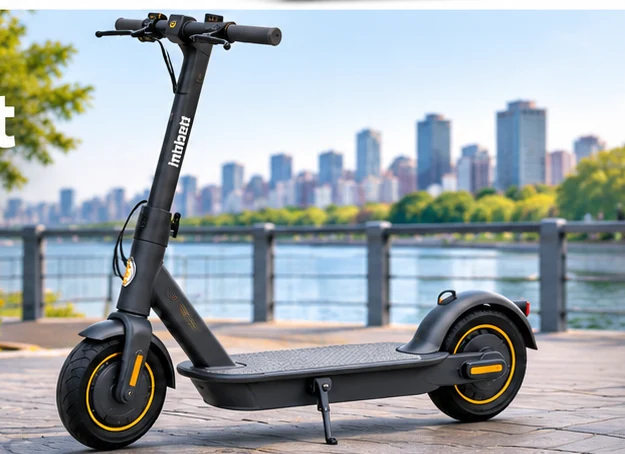
The G30P is a stand-up electric kick scooter driven by a single rear-wheel motor. It is not a self-balancing two-motor scooter, a distinction that the old version of this article got wrong. Segway rates its motor at 350W nominal power and the U.S. top speed at about 18.6 mph.
That's enough pace for many bike-lane commutes, but the G30P isn't quick off the line by modern performance-scooter standards. Its kick-to-start throttle also takes getting used to: at a stoplight, you push the scooter first rather than expecting instant acceleration from a standstill. On an incline, that can make the first few feet awkward.
The tires do more work than you'd think
Its 10-inch air-filled, self-sealing tires are one of the reasons the G30P remains relevant. They provide more cushioning than small solid wheels and can help reduce certain punctures. They are not a substitute for suspension, though: repeated pavement seams, potholes and rough asphalt still come through the deck and handlebars. Riders dealing with broken roads every day should put a suspended model on their shortlist.
Hills expose the limits
Segway publishes a maximum slope rating of around 20%, but that is not a guarantee of maintaining full speed up a long hill. In RiderGuide's documented hill test—a 200-foot, 10% grade with a 165-pound rider—the G30 completed the climb in 17 seconds, averaging about 8 mph. That gives a more useful sense of its ability than the slope figure alone. Heavier riders and longer climbs can reduce speed further.
How far does the G30P go in real life?
40.4 miles is the manufacturer claim, not a typical full-speed commute result. The G30P manual's range test uses a roughly 165-pound load, mild temperature, pavement and a speed well below maximum. Riding faster, carrying more weight, stopping repeatedly, climbing hills and riding in cold weather all change the result.
Segway's specification40.4 miles
Advertised maximum under the manufacturer's specified conditions. Useful for comparing battery potential, not for scheduling a commute without reserve.
Independent published results21.6–30.3 miles
RiderGuide reported 21.6 miles in its more demanding ride test. ERideHero reported 30.3 miles in its regular-speed protocol. These are different tests with different routes and methods, not a controlled head-to-head range.
So if you need a 12-mile round trip, a healthy G30P gives you more flexibility than a smaller-battery scooter. If your regular route is near the upper end of its published range, don't count on an aging battery and ideal weather rescuing you on the way home. Build in a sensible margin for changing conditions.
Range: advertised vs. independently reported
These figures come from different test conditions and should not be treated as a controlled head-to-head test.
| Source | Reported range |
|---|---|
| Segway advertised maximum | 40.4 miles |
| ERideHero road test | 30.3 miles |
| RiderGuide road test | 21.6 miles |
What the MAX G30P gets right—and where it falls short
Reasons people still consider it
- Large 551Wh battery for its original commuter class.
- 10-inch tubeless pneumatic tires with self-sealing design.
- Front mechanical drum brake plus rear electronic braking.
- Built-in charging arrangement reduces the need to carry a large brick.
- Segway publishes model-specific manuals and repair guidance.
Reasons to choose something newer
- Roughly 42 pounds is inconvenient on stairs or transit.
- No suspension for rough streets.
- Modest hill performance and acceleration.
- Older feature set versus the MAX G2 and G3.
- U.S. G30P/G30LP folding-mechanism recall requires attention.
The G30P has an IPX5 water-resistance rating, but that isn't a reason to ride through deep water or ignore the manufacturer's weather and care guidance. And although its tires have a self-sealing layer, tire pressure and tread condition still matter.
G30P vs G30LP vs MAX G2: don't buy the wrong MAX
The names look nearly identical in marketplace listings. The actual scooters are not.
Original full-size MAXG30P
551Wh battery · up to 40.4 miles claimed · about 42 pounds.
Better for someone who wants the original larger-battery commuter and finds a compelling deal. U.S. recall applies.
Smaller original MAXG30LP
367Wh battery · up to 25 miles claimed · about 39 pounds.
Don't pay a G30P price thinking this is the same scooter. U.S. recall also applies.
Newer comfortable commuterMAX G2
551Wh battery · up to 43.5 miles claimed at low speed · suspension.
Generally the more appealing daily-use choice if comfort on imperfect pavement matters and the price difference is reasonable.
Newer performance-oriented modelMAX G3
597Wh battery · up to 50 miles claimed at low speed · higher performance.
A different category of purchase for riders willing to pay more; compare local speed rules and your actual commute.
The newer models' quoted range figures also depend on conditions. Don't compare every range number as if all four scooters were tested at the same speed or by the same organization. For a broader shortlist, see our folding electric scooter guide, which has a different purpose than this G30P-specific review.
Buying a used Ninebot MAX G30P? Check these first
- Read the deck label. Confirm that the scooter is actually a G30P rather than a G30LP or regional variant.
- Resolve the recall. Ask for documentation of the Segway folding-mechanism remedy and inspect the lock according to the manufacturer's instructions. Don't ride a recalled scooter until the required checks and remedy are complete.
- Inspect the battery and charging behavior. Ask for normal charging history and check for error messages or abrupt power loss. Battery age matters.
- Check wheels and brakes. Look for low pressure, tire damage, worn tread and abnormal braking feel.
- Look for crash damage. Examine the stem, hinge, deck, fork and wheels for cracks or unusual movement.
- Make sure the charger and app work. Confirm the correct charging setup, account access and normal system operation.
- Compare the actual total price. A “cheap” scooter that needs a battery, tires or structural repairs may cost more than a supported newer one.
For charging or range issues, our electric scooter troubleshooting guides cover safe checks. For a brake, wheel or battery service issue, contact a shop and confirm it supports the G30P specifically.
Find electric scooter repairFind parts suppliersIs the original Ninebot MAX worth buying in 2026?
It can be, with conditions. A G30P that has had the recall remedy completed, has a healthy battery and costs meaningfully less than a newer commuter can still be a practical choice on reasonably smooth roads. Its range-oriented design has aged better than its comfort and acceleration.
But the case for buying it weakens quickly if you have steep hills, rough pavement, stairs, a heavy daily carry, or a price quote approaching a MAX G2. Segway's own online store showed the G30P as out of stock when this guide was checked; availability and asking prices can change, so don't treat a product-page list price as a real purchase option.
If you're comparing a used G30P with a newer model, make the decision in this order: recall status, battery condition, local service support, route comfort and total cost. A scooter isn't a bargain if you can't safely use it.
Ninebot MAX G30P questions
Is the Ninebot MAX G30P self-balancing?
No. It's a stand-up, handlebar-steered electric kick scooter with a single rear-wheel motor.
How many miles does a Ninebot MAX G30P really get?
Segway claims up to 40.4 miles under specified conditions; independent published test results differ substantially with riding conditions. RiderGuide reported 21.6 miles in one protocol, while ERideHero reported 30.3 miles in another.
Does the G30P have suspension?
No. Its air-filled tires help, but they cannot smooth rough pavement the way a true suspension system can.
Is the MAX G30P recalled?
Yes, in the United States. The March 2025 recall covers MAX G30P and G30LP models for potential folding-mechanism failure. Follow the CPSC notice and Segway's official remedy instructions.
Should I buy a G30P or MAX G2?
If both are available at similar prices, the MAX G2's suspension and newer design make it the more attractive option for many commuters. A properly remedied G30P becomes interesting when it is substantially cheaper and in good condition.
Final takeaway: The original Ninebot MAX earned its reputation by making ordinary commuting simple. Its real strengths remain range, tires and practicality. In 2026, it's a value purchase—not an automatic recommendation—and the recall check comes first.