
Buying guides / Electric scooters
12 Best Electric Scooters for Adults in 2026: Specs, Range & Tradeoffs
A 60-mile range sticker doesn't guarantee a 60-mile ride. We've compared 12 current electric scooters by the things that actually affect ownership: how their range is quoted, what they weigh, how they handle rough streets, and what you'll have to maintain.
As an Amazon Associate, TheScooterist earns from qualifying purchases. Product availability and selected versions can change.
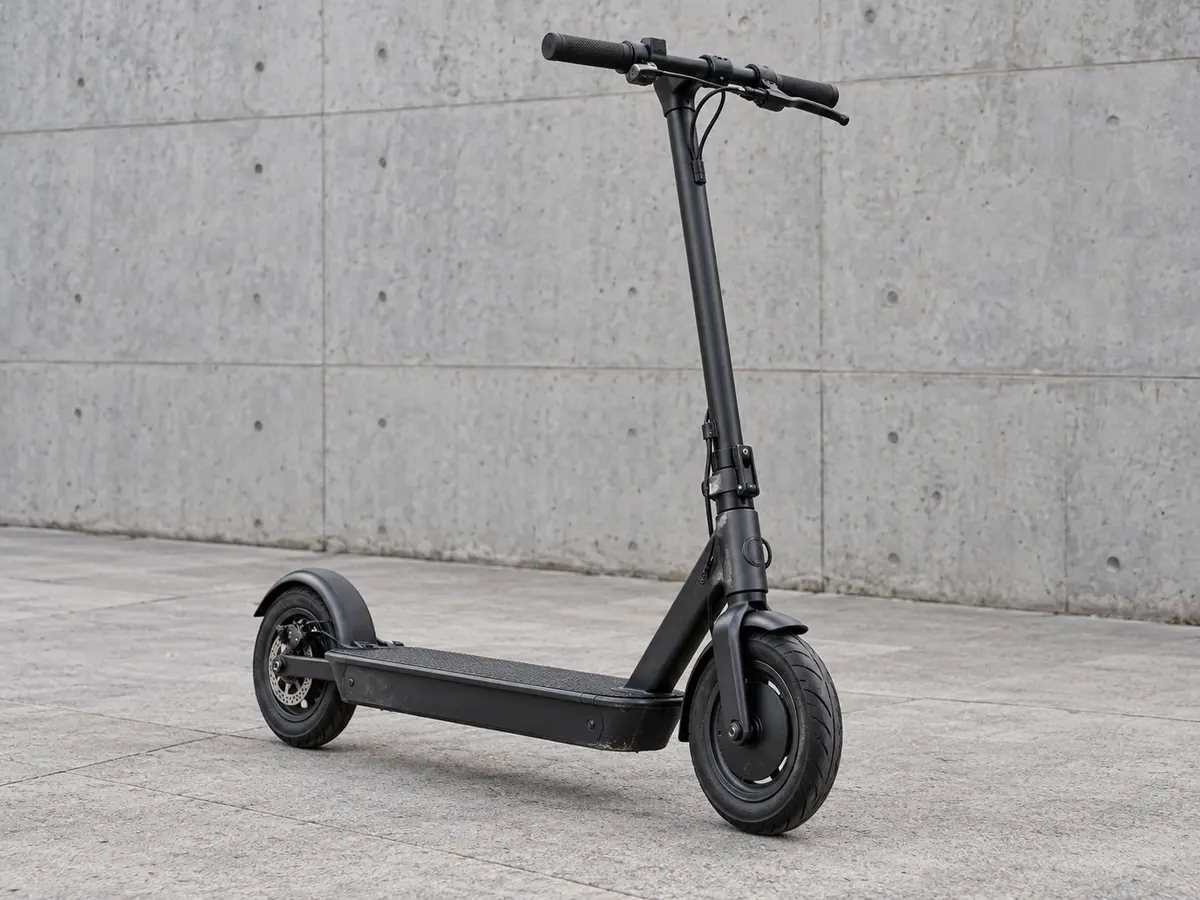
Suspension, 11-inch tires and range figures broken down by speed mode.
A straightforward 20-mph commuter with a more manageable weight.
Unusually light at 26.2 lb, with a claimed 31-mile range.
Dual motors and a compact footprint for demanding urban routes.
Compare the 12 scooters
These are manufacturer-listed US-model specifications, not results from a common independent test. Range varies with speed, rider weight, hills, weather, tire pressure and the exact battery variant. Follow each model link for its fuller assessment below.
Every range figure below means up to the published figure, under that maker's stated conditions.
*MAX G3 Plus ships with a 20-mph default limit and can reach up to 28 mph where settings and local rules permit. VMAX VX2 Lite figures shown are for the LR battery; EMOVE Cruiser V2 figures are for the single-motor version. Other markets and versions may differ.
The range comparison most shopping lists leave out
Advertised range is not a standardized, equal-speed road test. Several makers give both economical and high-performance riding-mode figures, making the tradeoff unusually clear. These pairs come directly from each manufacturer's published mode-specific estimates.
Light green = slower-mode estimate; dark green = faster-mode estimate. Bars are scaled within each scooter pair, not across the whole list. These are the makers' estimates—not independent measurements or predictions of your range. Sources: Segway MAX G3 Plus, GOTRAX G4, GOTRAX GX3 and Segway E3 Pro.
A better buying calculation: If your round-trip commute is 12 miles, choose a scooter whose faster-mode or credible independent-test range is comfortably above 12 miles, with margin for cold weather, hills and battery aging. Don't shop by an Eco-mode maximum alone.
Our 12 electric scooter picks, with the tradeoffs
These recommendations compare published specifications and intended use, not hands-on testing by TheScooterist. We value balanced equipment, clear specification disclosures and practical ownership needs above a headline speed number.
Segway MAX G3 Plus
Best overall commuter
The MAX G3 Plus earns our first position because its specification sheet speaks to everyday riding rather than speed alone: front and rear suspension, 11-inch tires and a sizable 717 Wh battery. Segway also spells out the range in different modes: 56 miles in Eco at 10 mph, 36 in Drive, 28 in Sport and 22 in Sport+. That makes it easier to plan a realistic commute than a single flattering mileage figure.
Who it's for: Someone commuting regularly over cracked urban pavement who wants room to grow beyond a beginner scooter. Its 56-lb weight is acceptable if you can roll it into storage rather than carry it up three flights of stairs.
VMAX VX2 Lite — LR battery
Best comfort-to-price balance
Despite its “Lite” name, the VX2 Lite has front hydraulic and rear elastomer suspension, 10-inch tubeless tires and IPX6 water resistance. We favor the long-range (LR) version here, but the shorter-range (SR) model is worth considering if your ride is brief and you want to save weight and money.
The published range needs careful reading: VMAX claims up to 56 miles for the LR in economy conditions but also provides a more useful 29.9-mile estimate in its faster performance test. The maker says that test uses a 165-lb rider under stated conditions. That's transparency we wish more companies offered.
GOTRAX G4
Best budget commuting option
You don't need a 70-lb performance scooter to reach the office. The G4 is a more approachable package with a 500W nominal motor, a folding frame, 10-inch wheels and a manufacturer-listed UL 2272 electrical certification. Its top speed of 20 mph suits many urban routes where there are frequent stops.
GOTRAX quotes 25 miles in Gear 1, which tops out around 15.5 mph, but about 15 miles in Gear 2 at 20 mph. For shorter commuting distances with reliable charging, the G4 can make more financial and practical sense than higher-end machines.
NIU KQi Air
Best for carrying on stairs or transit
Weight changes how often you actually use a scooter. At a published 26.2 lb, the carbon-fiber KQi Air is a standout for riders who must lift their ride onto a train, carry it into an apartment or fit it into a cramped office. Its 451.2 Wh battery and claimed 31-mile maximum offer a useful balance on paper.
NIU lists 9.5-inch tubeless tires and IP55 ingress resistance. The 20-mph top speed is moderate, but if you carry the scooter daily, losing 20 or 30 lb compared with a larger alternative is a meaningful benefit.
Apollo Go
Best compact dual-motor option for hills
A rider facing steep city blocks should pay attention to hill-climbing traction and torque, not just advertised top speed. Apollo gives the Go a dual-motor drivetrain in a relatively compact 49-lb chassis. Nine-inch self-healing tubeless tires and an IP66 rating are useful details for dense urban routes, too.
Its published range is up to 36 miles, although aggressive acceleration and hills can lower that figure. We like the Go for an experienced commuter who wants responsive hill performance without stepping up to a 90-lb machine.
NIU KQi 300X
Best for imperfect city pavement
The KQi 300X emphasizes comfort and tire practicality over headline speed. It combines suspension with 10.5-inch self-healing tubeless tires, a 608.4 Wh battery and a relatively restrained US-spec top speed. Those details suit riders who prioritize predictability on pothole-prone city streets.
NIU's quoted 37.3-mile range is a maximum, not a guarantee. If your commute is short but the surface is rough, the 300X may be a better match than a faster unsuspended scooter.
Apollo City
Best higher-performance urban commuter
If you want the comfort and acceleration of a more capable machine and can store it at ground level, the Apollo City is worth comparing. Apollo's published lineup lists dual motors, a triple-spring suspension arrangement, 10-inch tires and a claimed 43-mile range. The stated 32-mph top speed puts it firmly beyond the requirements of many bike-lane commutes.
At around 65 lb, this is a scooter to roll, not casually carry. Check whether the added performance is worth that everyday inconvenience and whether replacement consumables are readily available for your exact model year.
INMOTION S1F
Best for riders needing a higher load rating
Maximum rider-and-cargo capacity should be a first filter, not an afterthought. The INMOTION S1F lists a comparatively high 308-lb load rating, front and rear suspension and a long published range of up to 59 miles. That combination deserves a look from riders who otherwise struggle to find scooters with enough stated capacity.
The manufacturer quotes 25 mph, and its US documents list a water-resistance rating of IP54. We advise leaving room beneath the stated maximum payload for a backpack or other gear; the rating is a limit, not a comfort guarantee.
Segway F3
Best everyday midweight city scooter
The F3 occupies a useful middle ground between entry-level simplicity and the MAX G3 Plus. Segway equips the F3 with front hydraulic and rear elastomer suspension, 10-inch self-sealing tubeless tires and a 477 Wh battery. Its lighter 42.3-lb body will matter to some commuters more than the MAX's larger battery.
Here again, mode-specific figures tell the truth more clearly: Segway quotes 44 miles at 9 mph in Eco but around 25 miles at 20 mph in Sport. For a medium-distance commute, that faster estimate deserves more weight in your decision.
Segway E3 Pro
Best easy-to-live-with first scooter
The E3 Pro is a sensible first-scooter candidate for somebody who wants a familiar brand, straightforward 20-mph performance and some suspension without shopping in heavy performance categories. Segway lists 10-inch tubeless tires, electrical certification to UL 2272 and dual elastomer suspension.
Don't mistake its 34-mile Eco figure for the normal result at 20 mph. Segway also lists 25 miles in Drive and 17.5 miles in Sport. That makes it particularly appropriate for shorter urban trips with predictable charging rather than 30-mile round trips.
GOTRAX GX3
Best powerful machine for experienced riders
The GX3 is in a different class from a casual commuter scooter. GOTRAX lists dual 1000W motors, 11-inch tires and a substantial 94-lb weight. Its high top speed and equipment may appeal to experienced riders using suitable permitted environments, but they're unnecessary for most short bike-lane commutes.
The company's three range estimates explain the tradeoff well: 60 miles at roughly 20 mph in Gear 1, 40 miles around 30 mph in Gear 2 and 30 miles around 38 mph in Gear 3. Fast riding greatly changes the usable battery distance.
EMOVE Cruiser V2 — single motor
Best long-range-focused choice with serviceable parts
The Cruiser V2 suits a rider whose priorities are range and keeping a scooter serviceable over time. The single-motor configuration carries a claimed 62-mile maximum, a sizeable frame and 10-by-3-inch tubeless self-healing tires. Voro Motors also describes a split-rim wheel design intended to simplify tire work and offers an ecosystem of replacement and upgrade parts.
We specifically list the single-motor Cruiser V2. The dual-motor variant has different speed and weight figures; combining the best numbers from both would create a misleading comparison.
How to choose an electric scooter that fits your commute
- Measure the round trip. Record the distance between charges, not simply one way. Then add substantial reserve for hills, winds, low temperatures, detours and battery wear.
- Count every stair. A 26-lb scooter and a 74-lb scooter are different products to live with, even if you only lift one for 30 seconds a day.
- Match tires and suspension to the surface. Larger pneumatic or tubeless tires and a capable suspension generally help on damaged pavement, but their presence is not a substitute for slowing down.
- Compare brakes, lights and certification. Look for transparent brake descriptions, front and rear lighting, and credible battery/electrical system documentation. Where applicable, check for independent UL 2272 certification rather than vague “UL-compliant” marketing.
- Understand water ratings. IP ratings are not invitations to ride through standing water. Water damage coverage and riding recommendations can differ from the published resistance rating.
- Investigate parts before buying. Check whether the manufacturer sells tires, brake pads, chargers and controls for that model, and how repairs are handled in your area.
- Verify the rules on your roads. Speed caps, allowed locations and local equipment requirements vary widely. A manufacturer's maximum speed doesn't make that speed lawful where you ride.
What electric scooter ownership really costs
The purchase price is only the first line. A frequently used scooter will eventually need consumables such as tires and brake components; punctures or damaged parts can create downtime. Your effective cost also depends on whether you can handle simple maintenance or need local shop labor. Battery replacement may be a major expense later, so verify the manufacturer’s replacement-parts policy before you commit.
Two scooters advertised with the same range can have very different ownership experiences if one has accessible parts and the other has an unusual wheel size or hard-to-find components. If you intend to keep yours for several years, serviceability may be more valuable than a modest top-speed advantage. Our electric scooter repair directory can help you locate service providers, while the troubleshooting guide covers common charging and battery questions.
A short, important safety checklist
The US Consumer Product Safety Commission urges manufacturers to follow relevant lithium-battery and micromobility electrical standards, including UL 2272 for personal e-mobility devices. It also warns of battery fire and injury risks from noncompliant products. A certification is meaningful only when it applies to the exact product—ask for documentation if a listing is unclear.
- Use the charger specified by the manufacturer; stop using a battery or charger that is damaged, unusually hot or behaving abnormally.
- Wear a properly fitted helmet; consider additional protective gear, particularly on faster machines.
- Before each ride, check the brakes, tire condition, folding mechanism and lights.
- Keep both hands on the handlebars, watch for road hazards and never assume car drivers have seen you.
Safety references: US CPSC electrical standards notice and CPSC electric-scooter safety alert.
Frequently asked questions
What is the best electric scooter for most adults in 2026?
For regular commuting with moderate storage space, our spec-based choice is the Segway MAX G3 Plus because it combines suspension, larger tires and clear range estimates by riding mode. If carrying weight or budget matters more, the NIU KQi Air or GOTRAX G4 may fit better.
How much range does a 30-mile electric scooter actually get?
There is no universal percentage. Manufacturers use different rider weights, speeds and terrain to advertise maximum range. Treat 30 miles as the quoted result under stated conditions, find a faster-mode figure or reputable measured test when possible, and build a generous safety margin.
Which electric scooter is easiest to carry?
Of these 12, the NIU KQi Air is lightest at the manufacturer's listed 26.2 lb. Weight matters especially if you regularly negotiate stairs or use public transit.
Are dual-motor electric scooters worth it?
They can help when climbing hills and accelerating, but they can also bring extra weight, price and power consumption. Consider a dual-motor model only if your riding conditions justify those tradeoffs.
Do electric scooters need regular maintenance?
Yes. Tire pressure or condition, brakes, fasteners, lights and the folding latch deserve regular checks. The schedule and permitted user maintenance differ by model, so follow the owner's manual and seek qualified service when needed.
Should I buy the scooter with the highest top speed?
Usually not. Speed can increase stopping distance and injury risk, shorten battery range and exceed local rules. For everyday transportation, prioritize braking, surface comfort, safe operating speed, carrying weight and service support.
Keep reading: Electric scooters for commuting · Folding electric scooters · Browse all scooter businesses.
How we made this comparison
This is an editorial buying guide built from official US product pages and technical documentation reviewed in October 2026. We compared current or actively listed models, noted battery variants separately and used the manufacturer's more conservative mode-specific range when available. TheScooterist did not independently road-test these 12 scooters; actual performance and current availability can differ. The order is a fit-based editorial judgment, not a lab ranking or paid placement. Manufacturer research sources are linked below.
- Segway MAX G3 Plus, Segway F3 and Segway E3 Pro — model and range specifications.
- VMAX VX2 Lite — SR/LR battery options and test assumptions.
- GOTRAX G4 and GOTRAX GX3 — official specs and gear-specific range.
- NIU KQi Air and NIU KQi 300X — official US-model pages.
- Apollo Go and Apollo City comparison.
- INMOTION S1/S1F US technical information.
- EMOVE Cruiser V2 specifications and versions.
- US CPSC micromobility electrical standards notice.
Specifications can change. Before buying, compare the seller's exact model year, battery configuration, current manual and local rules.
Need more carrying capacity? Compare electric scooters for 300 lb riders by manufacturer weight limits and total riding load.